Stegosaurus Plates: Thermoregulation, Defense, or Just for Show?
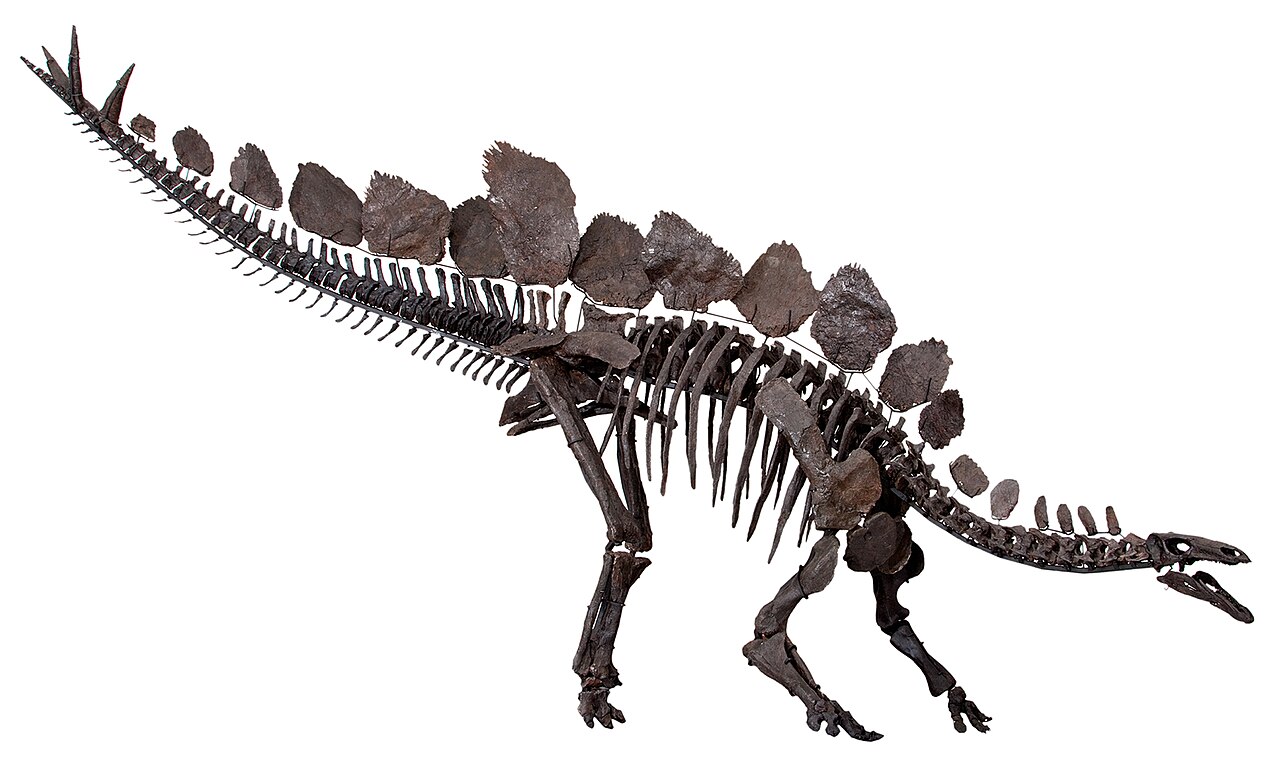
Few dinosaurs capture the imagination quite like the Stegosaurus. Its distinctive profile, characterized by a series of large, bony plates running along its back and sharp spikes protruding from its tail, makes it instantly recognizable among the prehistoric giants. Indeed, these unique features are so central to its identity that the very name Stegosaurus, derived from the Greek words 'stegos' (roof) and 'sauros' (lizard), literally translates to 'roofed lizard'. This appellation, coined by George Marsh, who discovered the first fossils, was based on his initial, albeit incorrect, belief that the plates lay flat and overlapped like roof tiles on an aquatic, turtle-like creature.
Yet, the true purpose of these iconic plates has been a subject of intense scientific debate for decades. Were they formidable armor designed to protect its spine from apex predators? Did they serve as a sophisticated biological system for regulating body temperature? Or, perhaps, were they simply an extravagant display, meant to attract mates or intimidate rivals? Modern paleontological discoveries and a re-examination of existing fossil evidence have shed new light on this enduring mystery, progressively steering scientific consensus towards a fascinating primary function.
The Iconic Stegosaurus: A Jurassic Marvel
Hailing from the Late Jurassic Period, roughly 159 to 144 million years ago, the Stegosaurus was a formidable herbivore that roamed the ancient landscapes of what is now Utah, U.S., specifically within the Morrison Formation. While it typically grew to an impressive length of about 6.5 meters (21 feet), some individuals were even larger, reaching up to 9 meters (30 feet). Despite its considerable bulk, this colossal creature possessed a remarkably small skull and brain for its size, suggesting a relatively simple cognitive capacity.
Its unique anatomy included forelimbs significantly shorter than its hind limbs, giving its back a characteristic arched appearance, further accentuating the striking vertical plates. Its feet were short and broad, supporting its massive frame. The genus encompasses at least three recognized species—S. sulcatus, S. ungulatus, and S. stenops—each contributing to our understanding of this magnificent beast. Beyond its plates, another feature that makes the Stegosaurus an unparalleled subject of fascination is its notorious spiked tail, often referred to as a "thagomizer." For more insights into its overall appearance and ancient context, dive into our article: Stegosaurus: Iconic Plates, Spiked Tail, and Ancient Facts.
Unraveling the Plate Mystery: From Protection to Physiology
The earliest interpretations of the Stegosaurus plates leaned heavily towards a defensive role. It was initially theorized that these large, triangular bony plates were arranged in two parallel rows, either staggered or paired, providing robust protection to the animal's backbone and spinal cord. This seemed a logical conclusion for an animal sharing territory with formidable predators of the Jurassic era. However, as paleontological techniques advanced and new specimens were unearthed and analyzed with greater scrutiny, this protective armor hypothesis began to face significant challenges.
Crucially, discoveries and re-examinations since the 1970s revealed that the plates were not arranged in parallel rows but alternated along the backbone. Furthermore, no two plates from the same individual have been found to possess precisely the same shape or size, challenging the notion of a uniform, interlocking armor system. These anatomical revelations, combined with further evidence, gave rise to a much more sophisticated and widely accepted hypothesis: thermoregulation.
The Thermoregulation Hypothesis: Living Solar Panels and Radiators
The thermoregulation hypothesis proposes that the Stegosaurus plates acted as a sophisticated biological temperature control system. Evidence suggests these bony plates were permeated with a rich network of blood vessels. Their alternating placement and upright orientation would have allowed for efficient heat exchange with the surrounding environment. In simpler terms, the plates could function in two primary ways:
- As Radiators: When the ambient temperature was cooler than the dinosaur's body temperature, blood could be shunted into these plates, allowing excess body heat to dissipate rapidly into the atmosphere. This would be particularly crucial for such a large animal, which would generate significant metabolic heat and struggle to cool down in hot conditions.
- As Solar Panels: Conversely, on cooler mornings or when the animal needed to warm up, it could orient its plates towards the sun. The extensive blood supply in the plates would then absorb solar radiation, transferring heat directly into the dinosaur's core body, effectively acting as living solar panels.
This idea gains traction when considering the climate of the Late Jurassic Period, which was generally warm and humid. For a large, slow-moving herbivore like Stegosaurus, efficient thermoregulation would have been vital for maintaining optimal body temperature and metabolic function throughout the day and across seasons. The sheer surface area of the plates, combined with their vascularization, strongly supports their role in managing internal temperature, much like the large ears of modern elephants help dissipate heat.
The Defense Argument: A Secondary Role?
While thermoregulation is now widely accepted as the primary function of the Stegosaurus plates, it's not impossible that they offered some secondary defensive benefits. Their sheer size and bony composition would undoubtedly present a deterrent to some predators. An attacking allosaur or ceratosaur might think twice before biting into a plate-lined back, even if the plates weren't designed for a direct protective armor function in the same way as, say, an ankylosaur's osteoderms. The visual intimidation factor alone could have been significant, making the Stegosaurus appear larger and more formidable to potential threats.
Beyond the Plates: The Thagomizer and Other Features
While the plates may have primarily been for thermoregulation, the Stegosaurus was by no means defenseless. Its most unambiguous weapon was its tail, adorned with two pairs of pointed bony spikes, famously known as the "thagomizer." These formidable spikes, capable of inflicting serious injury, are presumed to have served as potent defensive weapons against predators. While some early theories suggested they might have been ornamental, the biomechanics of the tail, combined with predator bite marks found on fossilized thagomizers, strongly indicate their use in active defense.
Another fascinating aspect of Stegosaurus anatomy relates to its nervous system. It was once a popular misconception that Stegosaurus possessed "two brains" due to an enlargement of the spinal cord in the region of the sacrum, which was indeed larger than its actual brain located in the skull. However, modern understanding suggests that this sacral cavity was more likely used for storing glycogen, a common adaptation in many present-day animals to provide quick energy reserves to the hind limbs and tail. This 'pseudo-brain' was not a second center of thought but rather a specialized metabolic storage unit.
The evolutionary journey of Stegosaurus also provides crucial context. These plated dinosaurs are closely related to the ankylosaurs, sharing not only dermal armor but also several other features, including a simple curved row of small teeth suitable for a herbivorous diet. Both groups evolved from an earlier lineage of smaller armored dinosaurs, such as Scutellosaurus and Scelidosaurus from the Early Jurassic Period. Interestingly, while these early relatives had armor covering their flanks, stegosaurs appear to have lost this lateral plating, further emphasizing the specialized, upright nature of their dorsal plates. For a deeper dive into these anatomical peculiarities and the myths surrounding them, explore our article: Beyond the 'Two Brains': Stegosaurus Anatomy & Plate Mystery.
Understanding the Stegosaurus’s plates helps us appreciate the intricate adaptations dinosaurs developed to thrive in their environments. These ancient reptiles were not static creatures but dynamic examples of evolution at work, constantly refining their forms to survive and flourish.
In conclusion, the enigmatic plates of the Stegosaurus, initially thought to be protective armor or even just for show, are now largely understood to be sophisticated thermoregulatory devices. Their vascularized structure and alternating arrangement allowed this magnificent Late Jurassic dinosaur to efficiently manage its body temperature in a warm world, acting as both heat radiators and solar panels. While they might have offered a secondary visual deterrent, their primary role was physiological. This shift in understanding from simple defense to complex biological function highlights the continuous evolution of scientific knowledge and the incredible ingenuity of nature, even in creatures that walked the Earth millions of years ago.