Unearthing the Enigma: Beyond the 'Two Brains' of Stegosaurus
Few dinosaurs capture the imagination quite like Stegosaurus. With its distinctive silhouette—a walking fortress adorned with an array of unique plates and a formidable spiked tail—this Late Jurassic giant has been an iconic figure in prehistoric lore for over a century. Yet, beneath its instantly recognizable exterior lies a wealth of scientific discovery and ongoing debate that challenges long-held assumptions. From debunking the famous 'two brains' myth to unraveling the true purpose of its magnificent dermal plates, the study of Stegosaurus continues to reveal a creature far more complex and fascinating than initially imagined.
Our journey into the world of Stegosaurus begins with its very name, which offers a glimpse into early paleontological misconceptions. Coined by Othniel Charles Marsh, who discovered the first fossils of this remarkable dinosaur, "Stegosaurus" is derived from the Greek words 'stegos' (meaning 'roof') and 'sauros' (meaning 'lizard'). This 'roofed lizard' moniker stemmed from Marsh's initial belief that the creature's prominent plates lay flat, overlapping like tiles on a roof, much like an aquatic turtle. This early interpretation, though later proven incorrect, laid the foundation for its scientific identity and highlighted the mystery surrounding its most striking features.
The Iconic 'Roofed Lizard': An Introduction to Stegosaurus Anatomy
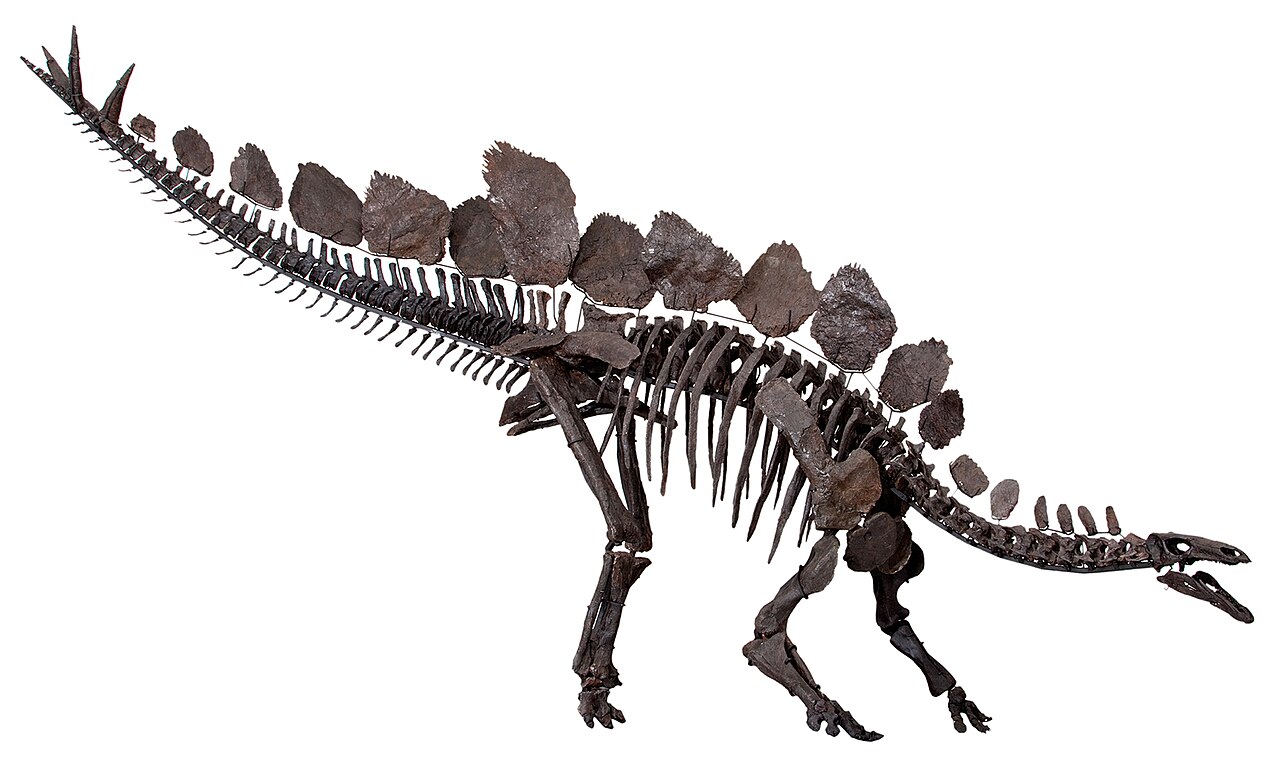
The Stegosaurus was a herbivorous dinosaur that roamed the Earth during the Late Jurassic Period, roughly 159 to 144 million years ago. Its fossils, primarily unearthed from the Morrison Formation in Utah, U.S., reveal a creature of impressive, if somewhat unusual, proportions. Typically, an adult Stegosaurus measured around 6.5 meters (21 feet) in length, though some individuals reached up to 9 meters (30 feet). Its most striking anatomical features included relatively short forelimbs compared to its powerful hind limbs, giving its back a distinctly arched appearance. Its feet were notably short and broad, supporting its massive frame.
However, what truly defined the Stegosaurus, and continues to spark scientific curiosity, are the structures along its spine and tail. Along its back were a series of large, triangular bony plates, an arrangement that has been a subject of intense scrutiny and re-evaluation over decades. At the very end of its tail were two pairs of sharp, pointed bony spikes, a defensive weapon so distinctive it earned its own name: the Thagomizer. These features combined to create a creature that, while appearing slow and cumbersome, was likely well-equipped for survival in its ancient ecosystem.
Decoding the Stegosaurus Plates: More Than Just Decoration?
For many years, the primary function of the Stegosaurus plates was debated. Early theories suggested they might have offered direct protection to the animal's backbone and spinal cord, acting as a form of armor against predators. This idea was often coupled with the belief that the plates were arranged in two parallel rows, either perfectly paired or staggered. However, the continuous march of scientific discovery, particularly since the 1970s, has painted a much more nuanced picture.
New discoveries and meticulous re-examination of existing Stegosaurus specimens have strongly suggested that the plates were actually arranged in an alternating pattern along the backbone. Crucially, no two plates from the same animal have been found to be exactly identical in shape or size, further supporting the alternating arrangement rather than a symmetrical pairing. This key insight opened the door to a more compelling hypothesis: thermoregulation.
The thermoregulation hypothesis proposes that these large, vascularized plates—meaning they contained a dense network of blood vessels—acted as radiators for the animal. By orienting its plates toward the sun, a Stegosaurus could potentially absorb heat, much like living solar panels, warming its body in cooler environments. Conversely, by facing them away from the sun or exposing them to a cooling breeze, the plates could release excess body heat, helping to prevent overheating in warmer conditions. This mechanism would have been crucial for a large, possibly ectothermic (cold-blooded) or partially endothermic (warm-blooded) creature like Stegosaurus, helping it maintain a stable internal body temperature. While defense and display are still considered possible secondary functions, the thermoregulation theory provides a robust physiological explanation for their unique structure and vascularization.
The evolution of thought surrounding Stegosaurus's plates serves as a compelling case study in how scientific understanding progresses. Initial assumptions give way to new evidence, leading to refined theories that offer deeper insights into these magnificent creatures. For more in-depth exploration of this intriguing topic, be sure to read our article: Stegosaurus Plates: Thermoregulation, Defense, or Just for Show?
Beyond the Skull: Debunking the 'Two Brains' Myth
Perhaps one of the most enduring myths associated with Stegosaurus is the idea that it possessed "two brains." This captivating but inaccurate notion arose from the discovery of an unusually large enlargement in the spinal cord within the sacral region (the part of the spine above the hips). This sacral cavity was, in fact, considerably larger than the animal's actual brain, which was remarkably small for such a massive creature, perhaps only the size of a walnut.
For a time, scientists speculated that this enlargement might have housed a secondary neural center, essentially a "second brain" to help control the massive hindquarters and tail. However, modern understanding has largely debunked this charming piece of folklore. It is now widely accepted that much of this sacral cavity was likely used for storing glycogen, a complex carbohydrate that serves as an energy reserve. Many present-day animals, including birds and some reptiles, have similar glycogen bodies in their spinal cords to support high energy demands, particularly in their limbs. This sophisticated biological adaptation suggests a more practical, metabolic function rather than a duplication of cerebral processing power. The true brain, located in its tiny skull, was responsible for the essential cognitive functions, while the sacral enlargement served a vital energy storage role for its powerful movements.
Defensive Arsenal: The Mighty Thagomizer and Evolutionary Ties
While the plates might have been primarily for temperature regulation, there was no ambiguity about the purpose of the Stegosaurus's tail spikes. Named the "Thagomizer" in a whimsical tribute from a Far Side comic strip, these two pairs of pointed bony spikes at the end of its tail were almost certainly formidable defensive weapons. Imagine a predator like Allosaurus approaching; a powerful swing of the Stegosaurus: Iconic Plates, Spiked Tail, and Ancient Facts-laden tail could inflict serious, even fatal, damage. Fossil evidence, including puncture wounds on predator bones that match the Thagomizer, supports this use. While some paleontologists suggest they might have also played an ornamental role, particularly in mating displays, their primary function was undoubtedly protection.
The Stegosaurus, comprising species such as S. sulcatus, S. ungulatus, and S. stenops, was part of a broader group called Stegosauria, which itself had deep evolutionary roots. These plated dinosaurs are closely related to the ankylosaurs, another group of armored dinosaurs. They share not only the characteristic dermal armor (skin osteoderms) but also several other features, including a simple, curved row of small, leaf-shaped teeth, ideal for processing vegetation. Both groups evolved from earlier, smaller armored dinosaurs like Scutellosaurus and Scelidosaurus, which lived during the Early Jurassic Period. Interestingly, while these early ancestors had armor covering their flanks, stegosaurs appear to have lost this particular feature, concentrating their dermal protection in the iconic dorsal plates and tail spikes, a testament to the diverse evolutionary pathways that life on Earth has taken.
Conclusion: The Enduring Legacy of Stegosaurus
From its initial misinterpretation as a 'roofed lizard' to its contemporary understanding as a sophisticated, warm-blooded (or partially warm-blooded) giant, the Stegosaurus continues to captivate and challenge our perceptions. Debunking the 'two brains' myth and piecing together the thermoregulatory function of its plates are prime examples of how paleontology is a dynamic field, constantly refining its knowledge with new discoveries and analytical techniques. This iconic dinosaur serves as a powerful reminder that our understanding of Earth's ancient past is ever-evolving, filled with mysteries waiting to be unraveled. The Stegosaurus is more than just a fossil; it's a testament to the incredible ingenuity of nature and the persistent curiosity of humanity.