Stegosaurus: Iconic Plates, Spiked Tail, and Ancient Facts
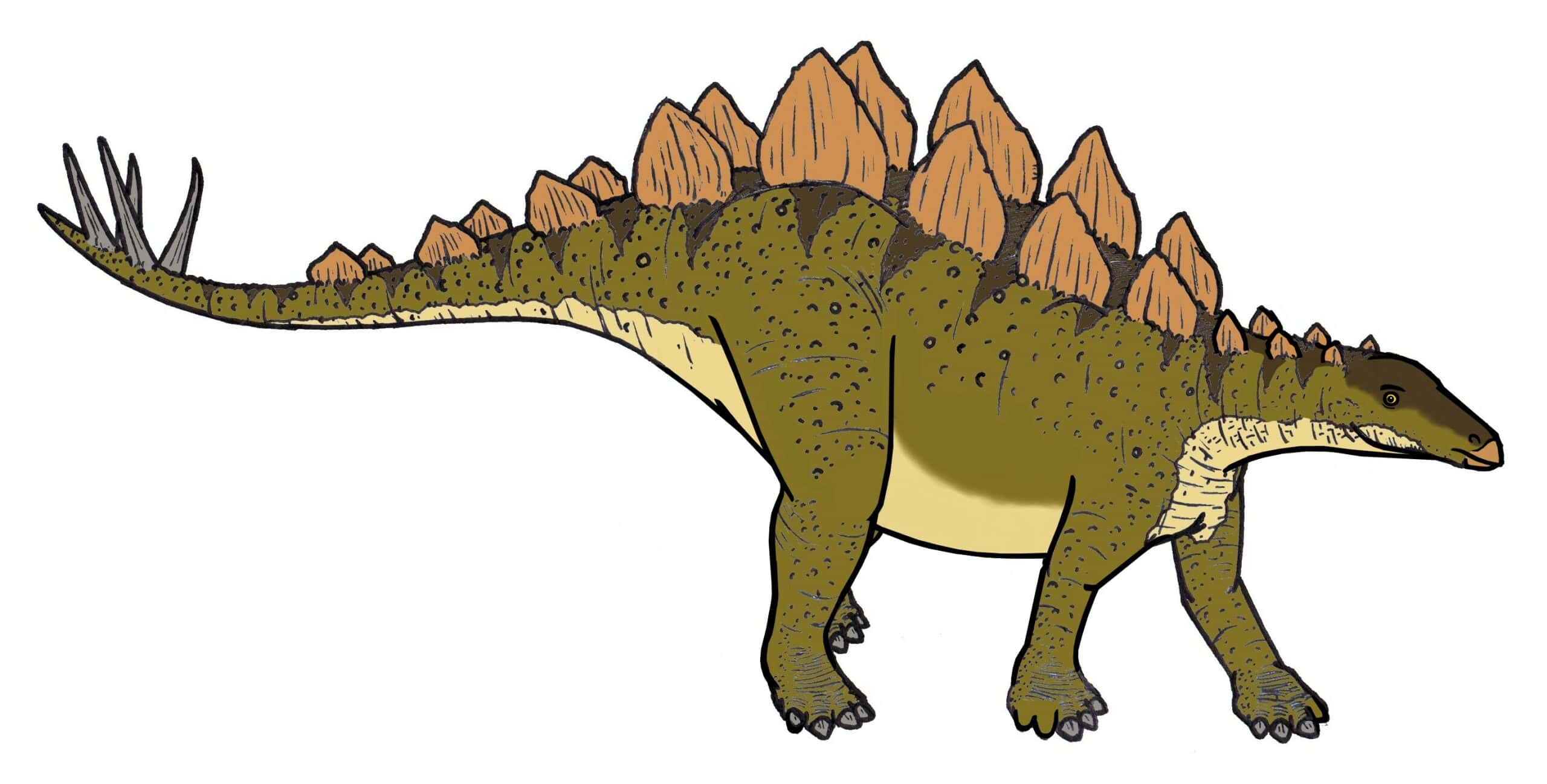
Few dinosaurs capture the imagination quite like the Stegosaurus. With its instantly recognizable silhouette – a series of majestic, kite-shaped plates lining its back and a fearsome spiked tail – this Late Jurassic marvel has cemented its place as one of the most iconic creatures to ever walk the Earth. Far from just a prehistoric spectacle, the Stegosaurus offers a fascinating glimpse into ancient ecosystems, sparking countless scientific debates and inspiring generations of dinosaur enthusiasts. Let's delve into the world of this "roofed lizard" and uncover the truths behind its legendary features.
The Iconic 'Roofed Lizard': Unpacking the Name and Discovery
The name Stegosaurus itself tells a story, though perhaps not the one its discoverer initially intended. Derived from two ancient Greek words, 'stegos' meaning 'roof' and 'sauros' meaning 'lizard', its scientific name literally translates to 'roofed lizard'. This appellation was coined by the renowned paleontologist George Marsh, who unearthed the first significant fossils of this remarkable creature in the late 19th century.
Marsh's initial interpretation of the fossilized plates was that they lay flat, overlapping like the tiles on a roof, much like those of an aquatic, turtle-like animal. While subsequent discoveries and re-evaluations proved this arrangement incorrect – the plates actually stood upright – the evocative name stuck. This anecdote serves as a wonderful reminder of how scientific understanding evolves with new evidence. These early finds, particularly from the rich deposits of the Morrison Formation in Utah, U.S., allowed us to begin piecing together the life and times of this incredible dinosaur, which roamed the Earth during the Late Jurassic Period, approximately 159 to 144 million years ago.
A Gentle Giant's Anatomy: Size, Stance, and Peculiar Features
Despite its formidable appearance, Stegosaurus was primarily a gentle, herbivorous giant. Growing to an average length of about 6.5 meters (21 feet), with some individuals reaching an impressive 9 meters (30 feet) – roughly the size of a modern-day bus – it was undoubtedly one of the larger creatures of its time. Its build was quite distinctive: the forelimbs were significantly shorter than its powerful hind limbs, giving the dinosaur a characteristically arched back and a low-slung head. This posture suggests it was primarily a low browser, likely feasting on ferns, cycads, and other ground-level vegetation abundant in the Late Jurassic landscape.
One of the most striking anatomical contrasts in Stegosaurus was its incredibly small skull and equally tiny brain, especially when compared to its massive body. Its brain was no larger than a walnut, leading many to ponder its intelligence and behavioral complexity. While certainly not a genius, its survival for millions of years indicates it was perfectly adapted to its environment. Its short, broad feet provided stability for its considerable weight, enabling it to navigate the varied terrains of its habitat, which likely included lush forests and floodplains. As a strict herbivore, Stegosaurus possessed small, simple, leaf-shaped teeth, suitable for stripping foliage rather than tearing flesh, and likely relied on gastroliths (stomach stones) to help break down tough plant matter.
The Morrison Formation, where most Stegosaurus fossils have been found, paints a picture of a semi-arid environment punctuated by rivers and lush gallery forests. This was a rich ecosystem, also home to iconic predators like Allosaurus and other herbivores like Brachiosaurus and Diplodocus, making the Stegosaurus's defensive features all the more crucial for its survival.
The Enigmatic Plates and the Defensive Thagomizer
No discussion of Stegosaurus is complete without exploring its most distinguishing features: the dorsal plates and the tail spikes. For decades, paleontologists have debated the precise function of these large, bony, kite-shaped plates. Early theories posited them as purely defensive armor, protecting the dinosaur's backbone and spinal cord from predators. While they certainly offered some protection, new discoveries and re-examinations since the 1970s have revealed a more complex story.
It is now widely accepted that the plates were arranged in two alternating rows along the dinosaur's back, rather than paired or overlapping. This arrangement, combined with the discovery that the plates were highly vascularized (meaning they contained numerous blood vessels), strongly supports the thermoregulation hypothesis. Imagine these plates acting like natural radiators: they could release excess body heat when the dinosaur was overheated, or conversely, absorb solar radiation to warm up its massive body during cooler periods. This remarkable biological engineering allowed Stegosaurus to regulate its body temperature in the dynamic climate of the Late Jurassic. Beyond thermoregulation, some scientists suggest the plates might have also served as a display mechanism for attracting mates or intimidating rivals, much like the elaborate crests of some modern birds.
Equally iconic, and arguably more menacing, was the Stegosaurus's tail, armed with two pairs of pointed bony spikes. These spikes, famously dubbed the "thagomizer" by cartoonist Gary Larson in his "The Far Side" comic strip, were undoubtedly powerful defensive weapons. Fossil evidence, including puncture wounds on predatory dinosaur bones that match the size and spacing of Stegosaurus tail spikes, confirms their active use in fending off attackers. Swinging its powerful, muscular tail, Stegosaurus could deliver potentially fatal blows to any predator foolish enough to get too close. The thagomizer was not just for show; it was a potent tool for survival in a dangerous world.
Debunking the 'Second Brain' and Evolutionary Lineage
For many years, a pervasive myth surrounding Stegosaurus was the idea that it possessed a 'second brain.' This misconception arose from the discovery of an enlarged cavity in the sacrum region of its spinal cord, which was indeed larger than its actual brain. While the thought of a dinosaur with two brains is undeniably intriguing, scientific consensus now points to a more practical explanation. It is highly probable that this sacral enlargement housed a glycogen body, a structure rich in glycogen, which stores energy and potentially aids in coordinating the large hindquarters and tail. Many modern animals, particularly birds, possess similar glycogen bodies, indicating a shared physiological mechanism rather than a redundant neurological system. To learn more about this fascinating anatomical feature, delve into Beyond the 'Two Brains': Stegosaurus Anatomy & Plate Mystery.
From an evolutionary perspective, Stegosaurus belongs to the Ornithischian order of dinosaurs, specifically within the Thyreophora suborder, which encompasses all armored dinosaurs. It is closely related to the formidable ankylosaurs, sharing several features such as dermal armor and a simple row of small teeth. Both groups are thought to have evolved from an earlier lineage of smaller, less heavily armored dinosaurs like *Scutellosaurus* and *Scelidosaurus* of the Early Jurassic. Interestingly, while its ancestors featured armor along their flanks, Stegosaurus and its immediate relatives largely shed this side protection, concentrating their defensive adaptations on their prominent dorsal plates and tail spikes. The genus comprises several recognized species, including S. sulcatus, S. ungulatus, and S. stenops, all providing valuable insights into the diversity within this iconic lineage.
Stegosaurus Today: A Lasting Legacy
The Stegosaurus remains a titan in the public consciousness, instantly recognizable and continually captivating. Its unique combination of beauty and defense – the delicate artistry of its plates paired with the blunt force of its thagomizer – makes it a subject of endless fascination. From museum exhibits to popular culture, Stegosaurus continues to inspire awe and curiosity, reminding us of the incredible diversity and grandeur of life that once dominated our planet. As paleontological research advances, who knows what new secrets this "roofed lizard" will reveal, further enriching our understanding of the ancient world?